How AI Can Help Specialty Clinics Solve The $200 Billion Admin Problem
There's a particular kind of exhaustion I recognize in clinic administrators every January. It's not the usual busy-season stress; it's the quiet resignation of watching the same preventable chaos unfold year after year.
Behind the front desk, a coordinator sits on hold with an insurance company for the third time that morning. In the back office, a billing specialist stares at a denial notice for a procedure that was clearly necessary. Somewhere, a physician who finished with patients at 5 p.m. is still clicking through her electronic health record (EHR) at 9 p.m., finishing notes she couldn't complete between appointments. For specialty clinics (like dermatology, orthopedics, cardiology and behavioral health), this administrative weight hits harder due to smaller teams and tighter margins. Complex procedures require more documentation and more prior authorizations than primary care.
The truth is, most of this work doesn't need to happen the way it does. We've just accepted it as inevitable for so long that we stopped questioning it.
The Administrative Tax That Clinics Have Normalized
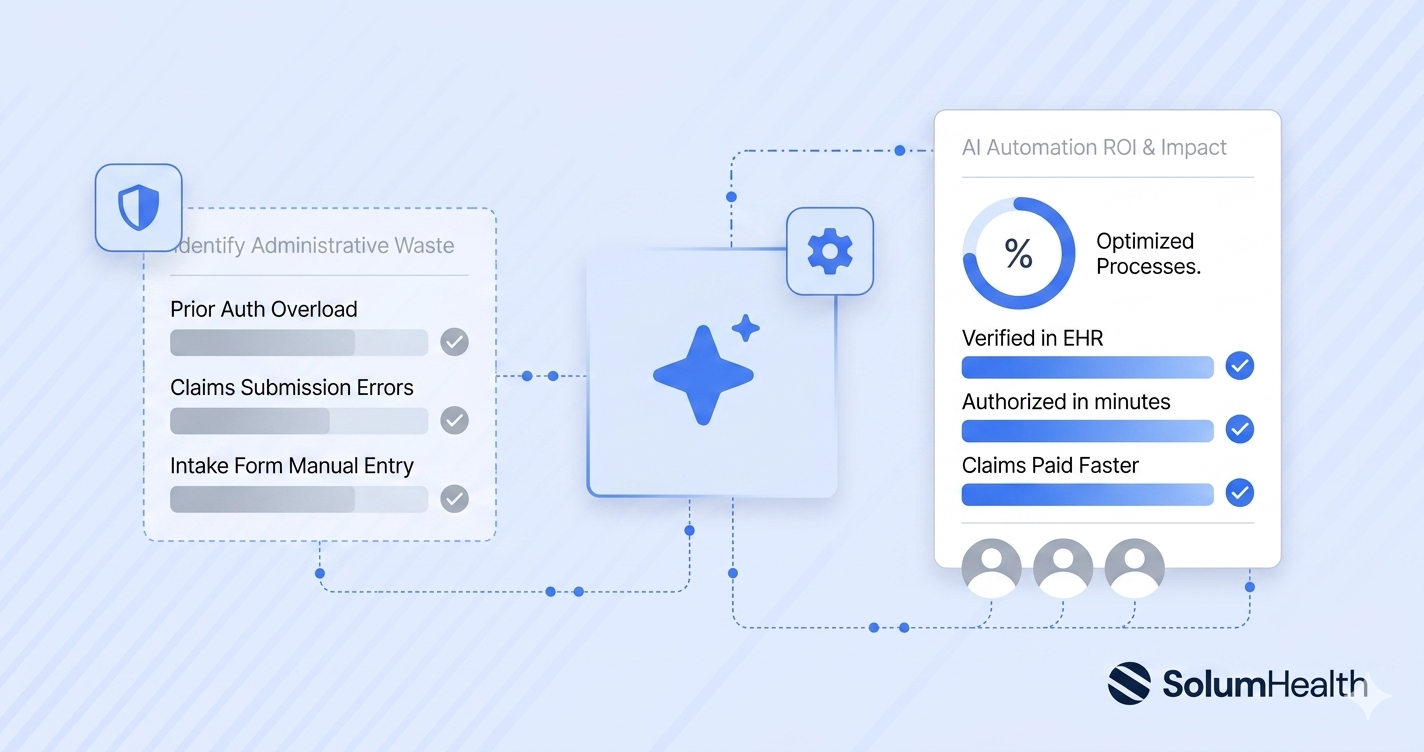
U.S. healthcare administrative spending totals approximately $1 trillion annually, and of that, $200 billion is related to financial transactions. For a specialty practice, that trillion-dollar burden becomes painfully concrete: staff overtime, delayed reimbursements and physicians finishing notes at midnight.
The AMA's 2024 survey quantifies what clinicians already feel: physicians complete an average of 39 prior authorizations weekly, spending 13 hours on the process. For specialists, whose procedures often require more complex approvals, that number runs even higher.
The downstream effects are staggering. Ninety-three percent of physicians report that prior authorization delays care. Twenty-nine percent have witnessed serious adverse events from those delays. And perhaps most telling, more than 78% of patients abandon treatment entirely because the authorization process proves too complex to complete. That should be a scandal, but instead, we've normalized it.
Staff turnover compounds the damage. The 2025 NSI National Health Care Retention Report found that replacing a RN now costs $61,110 on average. For a specialty clinic, losing even one experienced coordinator means months of institutional knowledge walking out the door.
Why This Moment Is Different
You've heard automation promises before, whether it's appointment reminders, electronic forms or basic eligibility checks. Those tools followed rigid scripts. If the insurance ID matched, coverage was confirmed. If not, the task bounced to a human queue.
The newer systems (what the industry calls agentic AI) operate differently. Unlike conventional automation that waits for prompts, agentic AI initiates multistep processes autonomously, adapts when information is incomplete and learns from patterns over time.
Think of traditional automation as a vending machine: press B7, get pretzels. Agentic AI is closer to a capable office manager who knows what you need, checks whether the resources exist, finds workarounds when they don't and handles the task without constant direction.
The adoption curve reflects how ready clinics are for this shift. An AMA-backed survey found that 66% of U.S. physicians used AI in 2024, up from 38% the year before. Most usage concentrates in documentation, coding and administrative workflows: exactly where specialty clinics feel the most pain.
Where Healthcare Automation Can Deliver Real Results
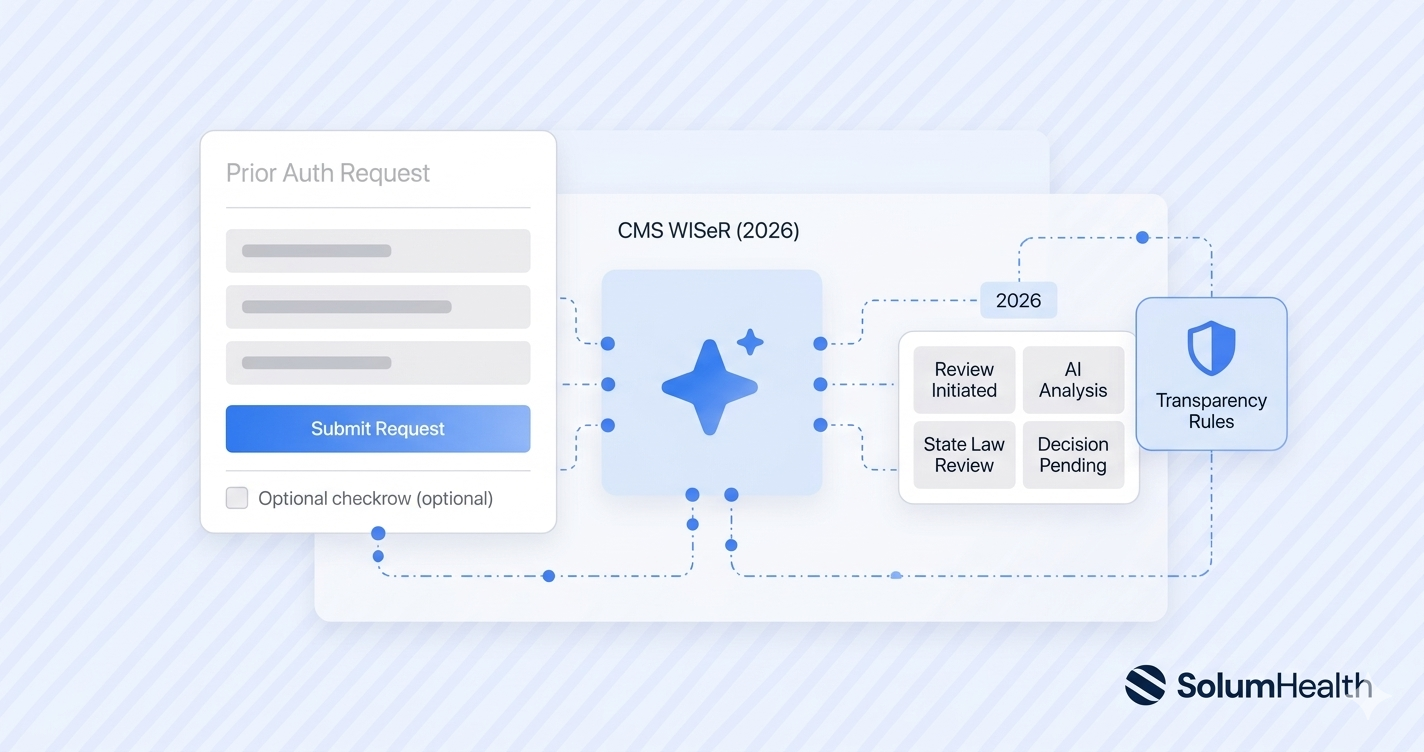
Prior authorization remains one of the most frustrating bottlenecks for specialty practices. Agentic AI is capable of pulling clinical documentation, matching it against payer criteria, submitting requests electronically and tracking status in real time. Authorizations that once took over 30 minutes can now be completed in less than 60 seconds.
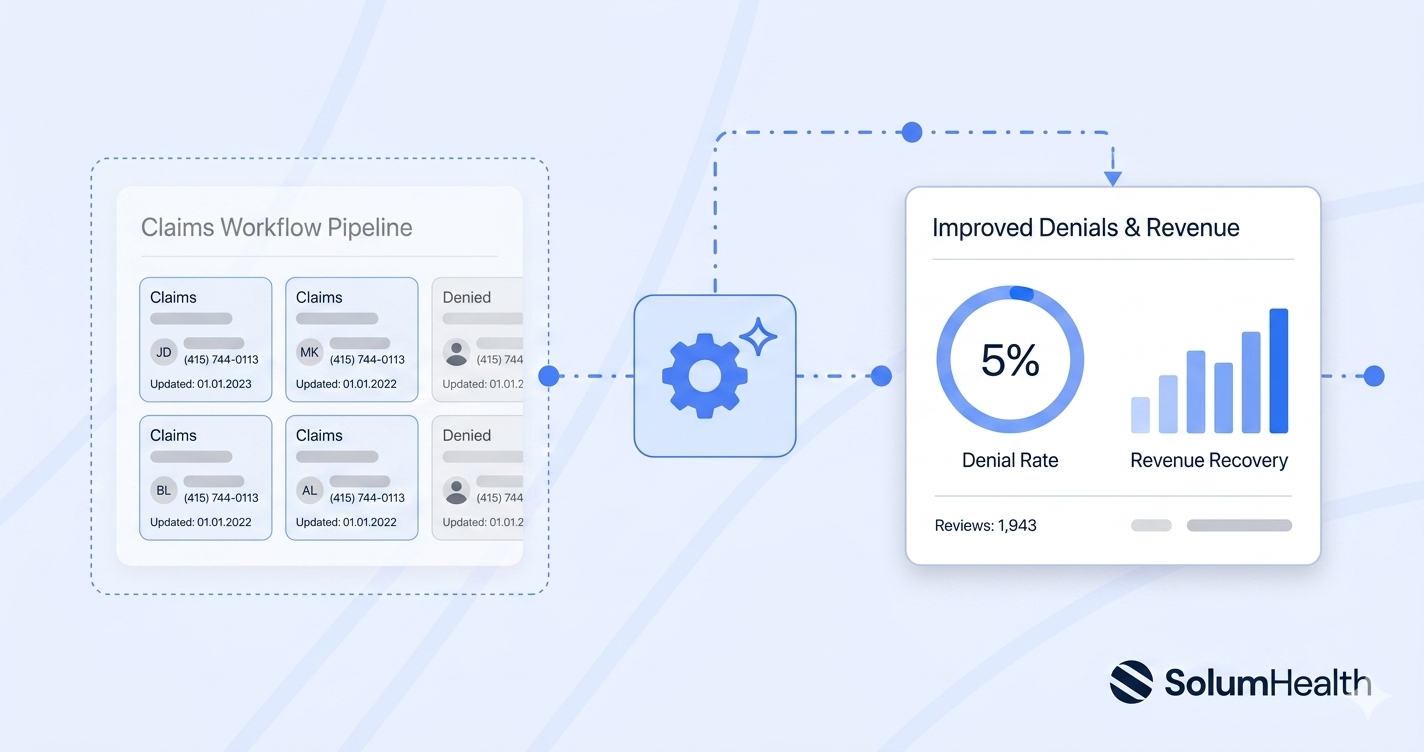
Predictive denial management focuses on a shift from reactive appeals to proactive prevention. A 2024 survey of hospitals found that nearly 15% of medical claims submitted to private payers are initially denied. According to the Medical Group Management Association's 2024 report, more than half of U.S. healthcare organizations report denial rates exceeding 10%, with registration and eligibility errors among the most common preventable causes. AI models can now assess these risk factors before submission, alerting staff to high-risk claims while there's still time to correct them.
Ambient clinical documentation addresses another painful reality: physicians spend roughly two hours on administrative tasks for every hour of patient care. AI can capture clinical conversations and generate notes automatically. For specialty clinicians already stretched thin, this can mean the difference between finishing notes before dinner or after.
What Clinic Leaders Can Do Now
For clinic leaders looking to understand what they should do now, here are some next steps to consider:
- Document your baselines. How long does authorization actually take? What are the denial rates by payer? How many hours do clinicians spend documenting after their last patient? You cannot demonstrate return on investment without knowing where you started.
- Verify compliance. AI tools handling protected health information must meet HIPAA standards. Get Business Associate Agreements and confirm security safeguards. These tools support clinical judgment; they don't replace it.
- Start small, but make it real. Pilot one workflow with actual patients and payers. Define success with specific metrics. If it cannot work in a focused test, it won't scale.
- Plan for a transition period. Configuration and training take time. The gains compound over months, not days. Organizations expecting immediate returns get disappointed; those planning gradual improvement see results.
The Choice Ahead
The phones will keep ringing every January; that won't change. What changes is whether your staff spends those hours on hold or focused on the patient in front of them, whether clinicians finish notes before dinner or after and whether your best people stay because they feel supported or leave for organizations that value their time.
Specialty clinics have accepted administrative burden as inevitable for too long, but AI is helping to change that. As AI continues to transform how clinics operate, the ones with a clear strategy in place are those that I believe will lead the change.